Epoxy Coatings In Indiana
Industrial parts and metal components exposed to moisture, chemicals, abrasion, or demanding handling conditions need more than an attractive finish. Epoxy Coatings in Indiana give manufacturers, fabricators, and equipment owners a durable barrier designed to help protect properly prepared substrates from corrosion and everyday damage. ISP Coatings Corporation, located in Romeo, MI, provides industrial coating solutions for customers seeking a practical, long-lasting finish for their components.
An epoxy finish is not a one-size-fits-all paint substitute. It is a thermosetting polymer coating that chemically bonds to a prepared surface and cures into a resilient film. For Indiana, IN customers evaluating a coating partner, the important questions are what material is being coated, what it will encounter in service, and what surface condition is required before coating begins.
Why epoxy protection matters for industrial components
Epoxy is often selected when a component needs dependable resistance to corrosive conditions, moisture, stains, wear, and many forms of chemical exposure. Once cured, an industrial epoxy layer creates a continuous protective surface over metal, helping reduce the direct contact between the substrate and its operating environment. That protection can be especially valuable when replacing damaged components or repeatedly cleaning unprotected surfaces would disrupt operations.
These coatings can be applied to a range of metal substrates, including bare metal, e-coat, zinc, phosphate, and surfaces that may have oil present, subject to appropriate preparation and coating requirements. The substrate, part geometry, and intended exposure all affect whether epoxy is the right choice. Sharing those details early helps establish realistic expectations for adhesion, coverage, appearance, and performance.
- Corrosion protection: A properly cured coating can help shield metal from moisture and corrosive exposure.
- Durability: Epoxy finishes are valued for holding up against abrasion, water, chemicals, and challenging temperatures.
- Cleaner maintenance: A stain-resistant coated surface can be easier to clean than unfinished material.
- Versatile application: Epoxy can serve many part types and industrial environments when specified for the use case.
Protection starts with the condition of the part
Surface preparation is central to coating performance because a finish can only bond as well as the surface allows. Oils, residue, corrosion, loose material, and incompatible contaminants can interfere with adhesion. Before requesting service, identify the base material, prior coatings, dimensions, production quantity, and the conditions the finished part will face.
It is also useful to distinguish between a cosmetic objective and a protection objective. A smooth, uniform appearance may matter, but chemical resistance, film integrity, edge coverage, and service conditions often matter more for working equipment. Discussing priorities with ISP Coatings Corporation helps ensure the coating decision reflects the function of the part, not simply its initial appearance.
A practical coating process for Indiana customers
The most useful coating process begins with application details rather than assumptions. ISP Coatings Corporation can review a part’s material, configuration, current surface state, and end-use demands to determine whether an epoxy system is an appropriate option. Customers in Indiana should provide representative information as early as possible, particularly when parts have tight tolerances, recessed areas, threads, mating surfaces, or areas that must remain uncoated.
- Define the service environment. Describe likely exposure to water, chemicals, abrasion, heat, impacts, or cleaning methods.
- Review the substrate and part design. Note the metal type, existing finish, dimensions, edges, holes, and masking needs.
- Prepare the surface. The part must be cleaned and conditioned so the coating can bond consistently.
- Apply and cure the coating. The epoxy is applied and cured to form its protective film.
- Inspect the completed part. Confirm that coverage, finish requirements, and functional areas align with the job’s needs.
Coating selection should account for the complete operating cycle, not only the moment a part leaves the shop. A component that will be submerged, washed frequently, exposed to solvents, or rubbed against adjacent equipment may need a different specification than one used in a dry, low-contact setting. Epoxy solutions provide meaningful protection, but no coating should be expected to overcome unsuitable surface preparation, improper use, or damage that penetrates the film.
Epoxy, other finishes, and flooring applications
Epoxy is a strong candidate when chemical resistance, adhesion, and a tough protective film are the main goals, but alternative industrial finishes may suit other needs. Nylon or plastisol coatings can be considered where flexibility, cushioning, grip, or a different protective character is important. The best choice depends on the substrate, expected impact and exposure, desired feel, and whether a part must meet particular dimensional or functional requirements.
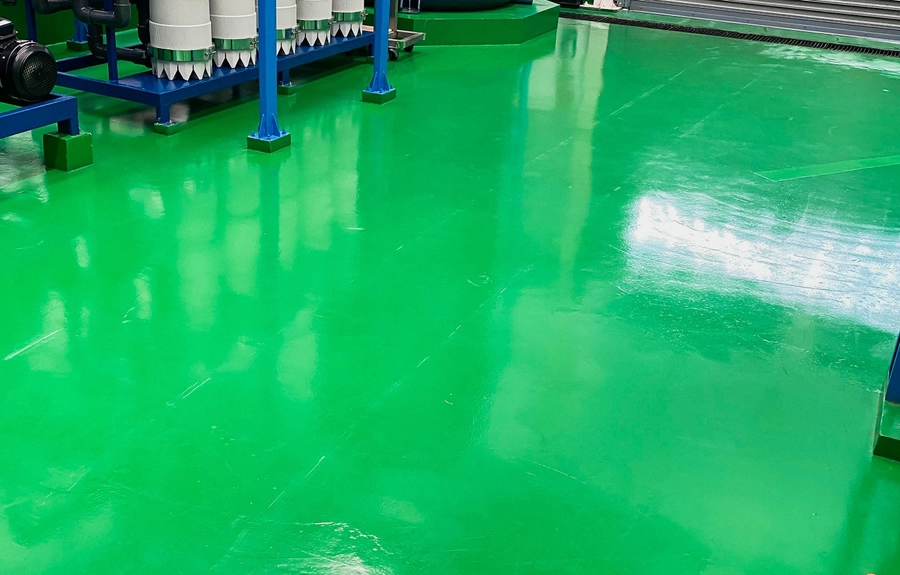
For facilities considering a durable resin-based surface underfoot, epoxy flooring describes a related application with different planning considerations than coating individual manufactured parts. Floor systems must account for concrete condition, moisture, traffic patterns, cleaning practices, and downtime during preparation and cure. A component coating decision should likewise begin with the surface and the environment, even though the substrate and installation approach are different.
An epoxy concrete coating is intended to protect and improve a concrete surface, while an industrial metal coating is formulated and applied around the needs of parts and equipment. Confusing the two can lead to unrealistic expectations about thickness, preparation, or durability. Ask which substrate is being addressed and how the finished surface will be used before selecting an epoxy-based solution.
Where durable epoxy finishes can add value
Coated parts appear across industries because machinery, fixtures, housings, brackets, tools, and equipment frequently encounter conditions that can degrade exposed metal. The goal is not merely to add color. It is to create a finish that supports service life, cleaning, corrosion control, and a more consistent surface where the selected coating system fits the application.
Equipment and production environments
In agriculture, equipment components may contend with moisture, soil, fertilizers, cleaning, outdoor storage, and routine wear. A durable epoxy finish can help protect applicable metal parts from conditions that encourage corrosion and staining. The most suitable system depends on the part’s movement, exposure, contact points, and maintenance routine.
The automotive sector uses coated components where appearance and protection can both be relevant. Parts may face moisture, road-related contaminants, handling, fluids, and repeated assembly activity. Evaluating geometry, fit, and whether coated areas interface with other components helps prevent a finish choice from creating downstream functional issues.
For construction equipment and fabricated items, abrasion, weather, jobsite debris, and rough handling can quickly challenge exposed surfaces. Epoxy may be appropriate for metal components requiring a protective layer, provided the intended use and expected impact level are understood. A coating is most effective as part of a sensible maintenance approach, not as a replacement for repairing severely compromised material.
In fitness environments, equipment parts may be handled frequently and cleaned often. Coated frames, supports, and hardware can benefit from a finish selected for durability and maintainability. Areas subject to constant metal-to-metal contact or heavy impact deserve special attention during the specification conversation.
The machine shop and stamping environment can introduce oils, coolants, sharp edges, chips, and repetitive contact. Coating planning should identify surfaces exposed to machining fluids and areas where buildup or dimensional change could affect function. Clear masking and preparation requirements are particularly important for precision-related components.
For marine applications, water exposure and corrosive conditions make protective finishes a serious consideration. Epoxy systems are commonly valued for moisture and corrosion resistance when matched to the part and its service conditions. Customers should explain whether a component sees splashing, immersion, salt exposure, ultraviolet light, or frequent washdowns.
In military and defense supply chains, component requirements can vary widely based on the item and its intended environment. An epoxy coating discussion should focus on the supplied part specifications, substrate, protection goal, and any required documentation or finish criteria. ISP Coatings Corporation can be contacted to discuss the coating needs for a particular component rather than relying on broad assumptions.
Choosing a coating provider and preparing a quote request
A productive provider conversation is specific. Instead of asking only whether epoxy is available, explain what the component is, how many parts require coating, what has been applied previously, and which failure mode concerns you most. Those details help identify potential preparation needs and avoid choosing a finish based solely on color or initial cost.
- What substrate and existing surface condition does the part have?
- Which areas need coating, and which areas need masking?
- Will the part encounter chemicals, water, abrasion, heat, or sunlight?
- Are there critical dimensions, threads, holes, or mating surfaces?
- What quantity and timing does the project require?
ISP Coatings Corporation brings close to five decades of experience in the coatings industry to industrial coating requirements. The company is based in Romeo, MI and serves customers seeking epoxy coating solutions in Indiana without claiming a physical Indiana office. Communicating complete part and use information is the clearest path to determining fit, scope, and next steps.
Frequently asked questions
What are epoxy coatings used for?
Epoxy coatings are cured polymer finishes used to protect suitable surfaces, especially metal components, from corrosion, moisture, chemical exposure, stains, and abrasion. They chemically bond to a properly prepared substrate and create a durable protective film. The right application depends on the material, surface preparation, and actual service environment.
Can ISP Coatings Corporation provide epoxy coating service for customers in Indiana, IN?
ISP Coatings Corporation provides epoxy coating solutions for customers in Indiana, IN from its location in Romeo, MI. Contact the company with part details, quantity, substrate, and performance needs so the project can be discussed accurately. The supplied information does not indicate a physical office in Indiana.
How do I know whether epoxy is preferable to nylon or plastisol?
Epoxy is often considered for a hard, durable film with strong adhesion and resistance to corrosion, moisture, and many chemicals. Nylon or plastisol may be worth considering when the part needs more flexibility, impact cushioning, texture, or a different surface feel. The substrate and operating environment should guide the final selection.
What information should I provide before requesting a quote?
Provide photos or drawings when available, the base material, overall dimensions, part quantity, current condition, desired coated areas, masking requirements, and expected exposure. Also mention any chemicals, temperatures, water contact, abrasion, or fit-sensitive features. Complete information helps make the coating discussion more useful from the start.
Discuss your Indiana epoxy coating needs
If your parts need a durable barrier against corrosion, chemical contact, moisture, or wear, ISP Coatings Corporation can help you start with the details that matter. Contact the Romeo, MI team to discuss your substrate, part design, quantity, and intended environment for epoxy coatings in Indiana. Contact ISP Coatings Corporation to begin a project conversation and request information about your coating needs.